Nuclear Medicine Scans: What You Need to Know
A patient guide to nuclear medicine imaging in Australia - bone scans, thyroid scans, lung scans, and more. How they work, what to expect, and costs.
- Time at clinic
- 1–4 hrs
- Typical cost
- $0–$250 with Medicare
- Referral
- Required
- Radiation
- Low dose
What to expect at your nuclear medicine scan
Step 1 of 5



Arrive and check in
10 min earlyReferral + Medicare card. Prep varies by scan type. The clinic tells you when you book.
Plays automatically. Tap a step to jump
In this guide
What is nuclear medicine imaging?
Nuclear medicine is a branch of medical imaging that uses small amounts of radioactive materials (called tracers or radiopharmaceuticals) to diagnose and sometimes treat conditions. Unlike X-ray or CT which send radiation through your body from outside, nuclear medicine works from the inside out - the tracer is injected, swallowed, or inhaled, and a special camera detects the radiation it emits.
This allows doctors to see how organs and tissues are functioning, not just what they look like. Different tracers are designed to concentrate in specific organs or tissues, making nuclear medicine highly versatile.
Types of nuclear medicine scans
Common nuclear medicine scans include:
- Bone scan - detects fractures, infections, arthritis, and cancer that has spread to bones. The tracer concentrates in areas of high bone activity.
- Thyroid scan - assesses thyroid function and identifies nodules. Used to evaluate overactive or underactive thyroid.
- Lung ventilation/perfusion (V/Q) scan - checks blood flow and air flow in the lungs. Used to diagnose pulmonary embolism (blood clot in the lung).
- Renal scan - evaluates kidney function, blood flow, and drainage.
- Cardiac perfusion scan (MIBI/myocardial perfusion) - shows blood flow to the heart muscle, often done with a stress test.
- Gallium scan - detects infection and inflammation throughout the body.
- HIDA scan - evaluates gallbladder function and bile duct flow.
Each scan uses a specific tracer designed for the organ being examined.
How to prepare for a nuclear medicine scan
Preparation varies by scan type, but general guidelines include:
- Tell the clinic about all medications, allergies, and medical conditions
- You may need to stop certain medications temporarily (the clinic will advise)
- Fasting may be required for some scans (cardiac, gallbladder)
- Drink plenty of water - good hydration helps with imaging quality and helps clear the tracer afterwards
- Wear comfortable clothing without metal
- Tell the clinic if you are pregnant, breastfeeding, or might be pregnant
The clinic will provide specific instructions when you book. Follow them carefully, as preparation directly affects image quality.
What happens during a nuclear medicine scan?
The process typically involves:
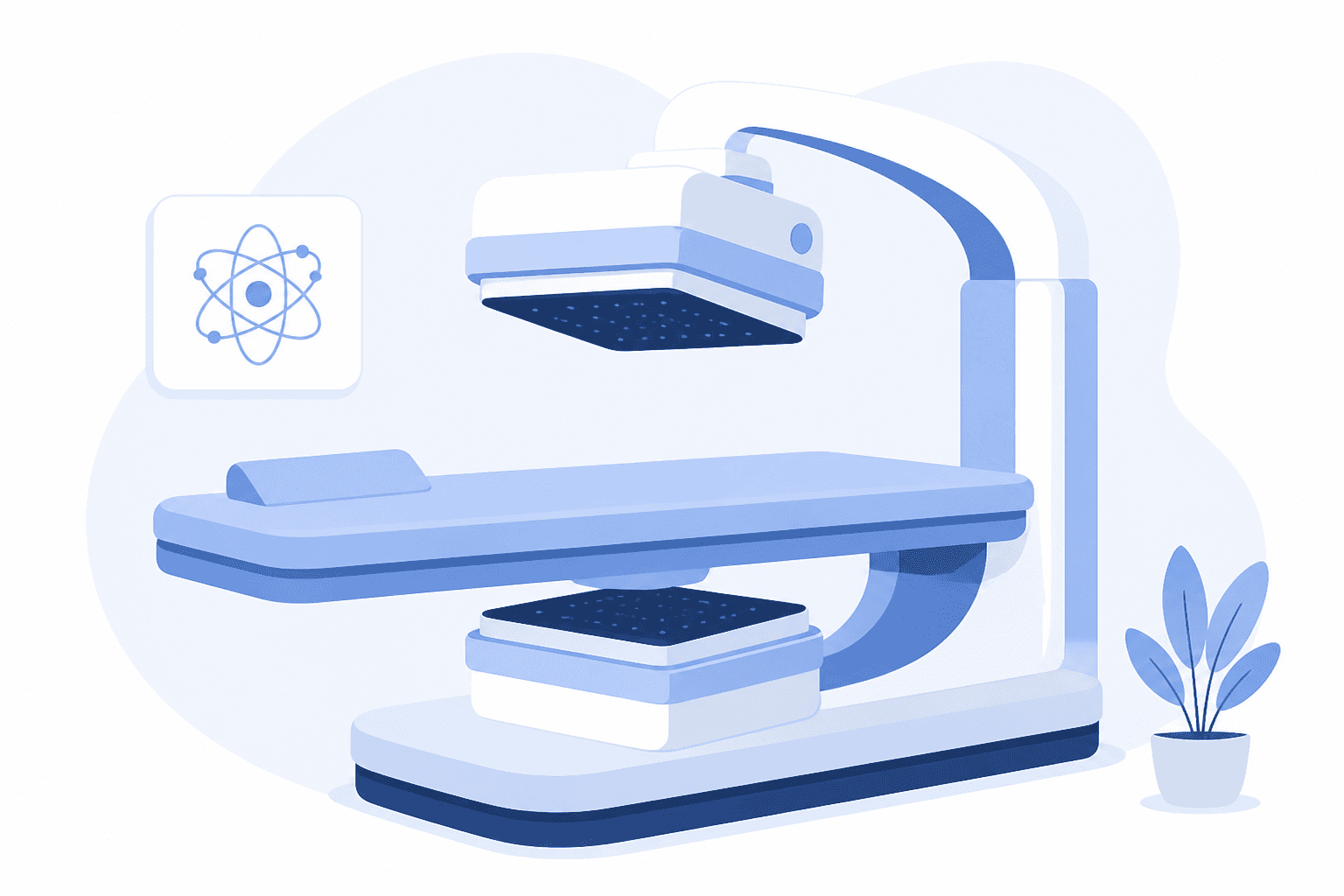
1. Tracer administration: The radioactive tracer is injected into a vein (most common), swallowed, or inhaled, depending on the scan type. 2. Waiting period: You wait while the tracer travels to the target area. This can take anywhere from a few minutes (lung scan) to several hours (bone scan - typically 2-3 hours). 3. Imaging: You lie on a table while a gamma camera takes images. The camera detects radiation emitted by the tracer and creates images. The camera does not emit any radiation - it only receives.
The scan itself is painless. You need to stay still during imaging, which typically takes 20-60 minutes. Some scans require images at multiple time points (e.g., immediately after injection and again several hours later).
How much does a nuclear medicine scan cost in Australia?
Costs vary by scan type:
- Bone scan: $0-$150 out-of-pocket with Medicare
- Thyroid scan: $0-$100 out-of-pocket with Medicare
- Lung V/Q scan: $0-$100 out-of-pocket with Medicare
- Cardiac perfusion scan: $0-$250 out-of-pocket with Medicare
- Renal scan: $0-$100 out-of-pocket with Medicare
Most nuclear medicine scans are well-covered by Medicare with a valid specialist or GP referral. Bulk billing is available at some centres, particularly for concession card holders.
Nuclear medicine departments are typically located in hospitals or larger imaging centres rather than small radiology practices.
Compare Nuclear Medicine clinics near you
See clinic locations, reviews and pricing information where available. The clinic confirms your appointment and any applicable fees.
Book Nuclear Medicine with RadlyIs nuclear medicine safe?
Nuclear medicine scans are safe. The radiation dose from most scans is comparable to or less than a CT scan. The tracers decay quickly (within hours to days) and are eliminated from your body through urine and natural decay.
Key safety points:
- The radiation dose is carefully calculated to be the minimum needed for accurate images
- There are no side effects from the tracers in the vast majority of patients
- Allergic reactions to nuclear medicine tracers are extremely rare
- You can resume normal activities immediately after most scans
- You may be advised to drink extra water and flush the toilet twice for a few hours after your scan
Nuclear medicine is avoided during pregnancy. If you are breastfeeding, you may need to pause for a period after the scan (the clinic will advise).
Your choice of clinic.
One place to start.
Compare clinics, choose the one that suits you and send your appointment request. The clinic contacts you to confirm.
Book Nuclear Medicine with RadlyMedical disclaimer: This guide is for general informational purposes only and is not a substitute for professional medical advice. Always consult your referring doctor for advice specific to your condition. Information is current as of April 2026.