CT Scan: What to Expect, Preparation & Cost
A complete guide to CT scans in Australia - how they work, what they detect, how to prepare, costs, and whether Medicare covers your scan.
- Time at clinic
- 10–15 min
- Typical cost
- $0–$200 with Medicare
- Referral
- Required
- Radiation
- Low dose
What to expect at your CT scan
Step 1 of 4


Arrive and check in
10 min earlyReferral + Medicare card. Some CT scans need fasting. The clinic tells you when you book.
Plays automatically. Tap a step to jump
In this guide
What is a CT scan?
A CT (Computed Tomography) scan, sometimes called a CAT scan, uses X-rays taken from multiple angles combined with computer processing to create detailed cross-sectional images of bones, blood vessels, and soft tissues.
CT scans are faster than MRI and provide excellent detail of bone structures, the chest, abdomen, and pelvis. They are one of the most commonly ordered imaging tests in Australia.
What does the CT in CT scan stand for?
CT stands for Computed Tomography - "tomography" meaning imaging in slices, and "computed" because a computer assembles those X-ray slices into detailed cross-sections of your body.
The older name CAT scan (Computerised Axial Tomography) refers to exactly the same test - you may still hear it from doctors and in older articles. And if you've ever heard someone say "city scan", that's just this scan misheard. Whatever it's called on your referral, it's one machine and one examination: a fast, painless scan on a doughnut-shaped scanner.
What can a CT scan detect?
CT scans are used to diagnose and monitor a wide range of conditions:
- Injuries - fractures, internal bleeding, organ damage from trauma
- Cancer - detecting tumours, monitoring treatment response, staging
- Chest conditions - pneumonia, pulmonary embolism, lung nodules
- Abdominal issues - appendicitis, kidney stones, bowel obstruction
- Vascular conditions - aortic aneurysms, blocked arteries
- Brain conditions - stroke, bleeding, head injuries
- Bone and joint problems - complex fractures, bone density issues
CT is often the first imaging test ordered in emergency situations because of its speed and detail.
How to prepare for a CT scan
Preparation varies depending on the type of CT scan:
- Fasting: You may need to fast for 4-6 hours beforehand, especially for abdominal scans or if contrast dye is being used.
- Contrast dye: If your scan requires contrast, you may need a blood test beforehand to check your kidney function. Tell the clinic if you have any allergies, especially to iodine.
- Clothing: Wear comfortable clothes without metal. You may be given a gown.
- Medication: Continue taking your regular medications unless your doctor advises otherwise.
- Diabetes: If you take metformin, you may need to stop it for 48 hours after a contrast CT. Your doctor will advise.
The clinic will give you specific preparation instructions when you book.
What happens during a CT scan?
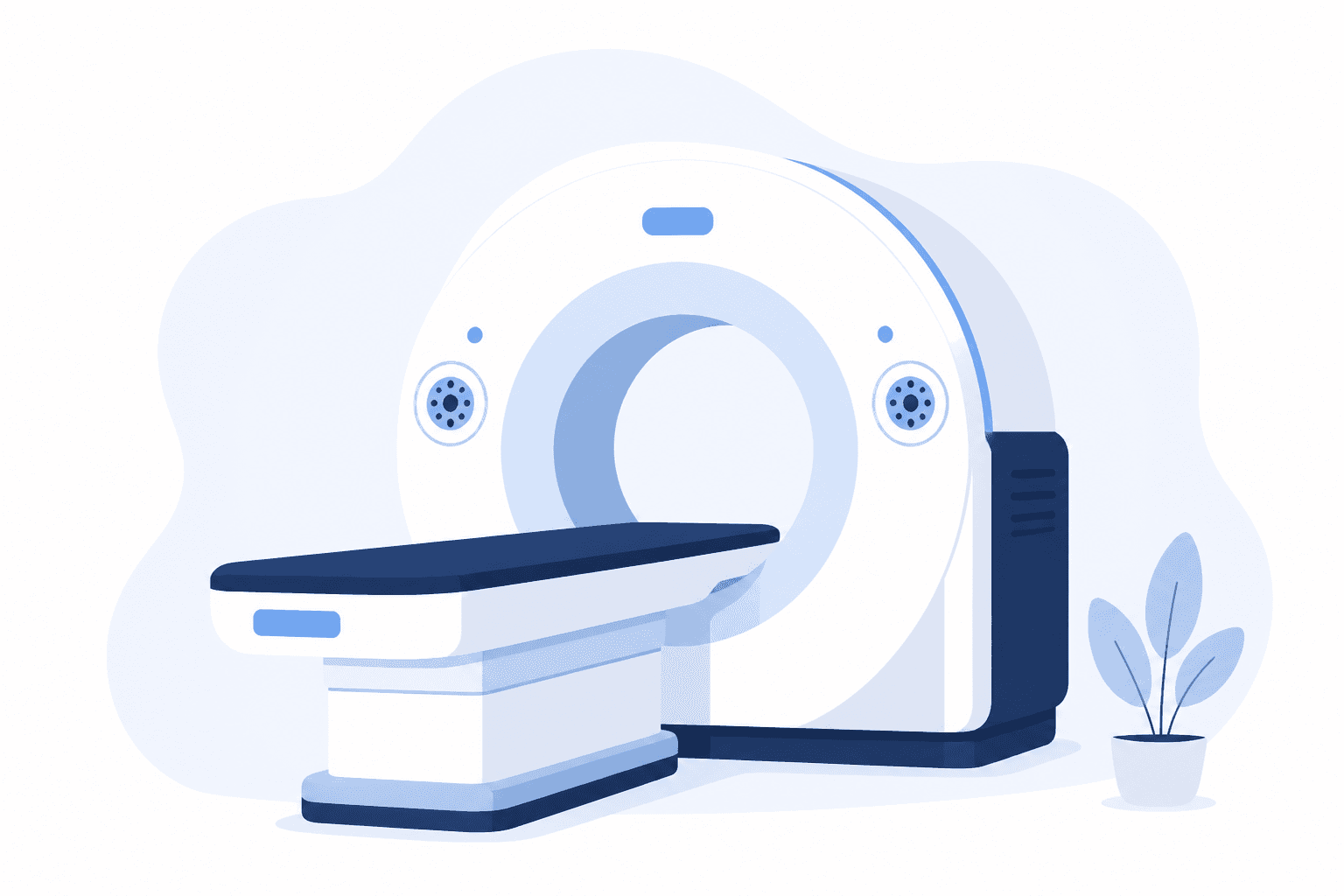
A CT scanner looks like a large doughnut. You lie on a table that slides through the opening while the scanner rotates around you taking images.
The scan is quick and painless - most CT scans take only 5 to 15 minutes. You'll need to stay still and may be asked to hold your breath for a few seconds.
If contrast dye is needed, it's injected through a small needle in your arm. You may feel a warm sensation or a metallic taste in your mouth - this is normal and passes quickly.
The radiographer operates the scanner from an adjacent room but can see and hear you throughout.
How much does a CT scan cost in Australia?
CT scan costs vary by body part and clinic:
- With Medicare rebate: $0-$200 out-of-pocket (most CT scans are Medicare-eligible with a valid referral)
- Without Medicare: $300-$700+
- Bulk-billed: Available at many clinics, especially for concession card holders
CT scans are more widely covered by Medicare than MRI scans. Most referred CT scans will attract at least a partial rebate. Use Radly to compare clinics and find bulk-billing options near you.
Compare CT Scan clinics near you
See clinic locations, reviews and pricing information where available. The clinic confirms your appointment and any applicable fees.
Book CT Scan with RadlyCT scan radiation: is it safe?
CT scans do use ionising radiation - more than a standard X-ray. However, the radiation dose from a single CT scan is generally low and the diagnostic benefits almost always outweigh the small risk.
- A chest CT delivers roughly 7 mSv of radiation (compared to 0.02 mSv for a chest X-ray)
- The average Australian receives about 1.5 mSv per year from natural background radiation
Doctors follow the ALARA principle (As Low As Reasonably Achievable) and will only order a CT when the clinical benefit justifies it. Modern CT scanners use dose-reduction technology to minimise exposure.
Pregnant women should avoid CT scans unless absolutely necessary. Always tell the clinic if you are or might be pregnant.
Your choice of clinic.
One place to start.
Compare clinics, choose the one that suits you and send your appointment request. The clinic contacts you to confirm.
Book CT Scan with RadlyMedical disclaimer: This guide is for general informational purposes only and is not a substitute for professional medical advice. Always consult your referring doctor for advice specific to your condition. Information is current as of April 2026.