What Is Radiology? Scans, Radiologists & Finding a Clinic
Radiology explained for patients - what a radiology clinic does, the difference between radiologists, radiographers and sonographers, referral rules, costs, and how to find a radiology clinic near you in Australia.
- Covers
- X-ray, CT, MRI, ultrasound +
- Referral
- Usually required
- Typical cost
- Many scans bulk billed
- Results
- To your GP in 1–2 days
How radiology works, start to finish

Your doctor refers you
1 GP visitRadiology starts with a referral. Your GP or specialist writes what scan they need and why. That referral also unlocks the Medicare rebate.

Choose any radiology clinic
Your choiceX-ray, CT, ultrasound, MRI. A radiology clinic does them all. Your referral works anywhere, so compare bulk billing and wait times first.
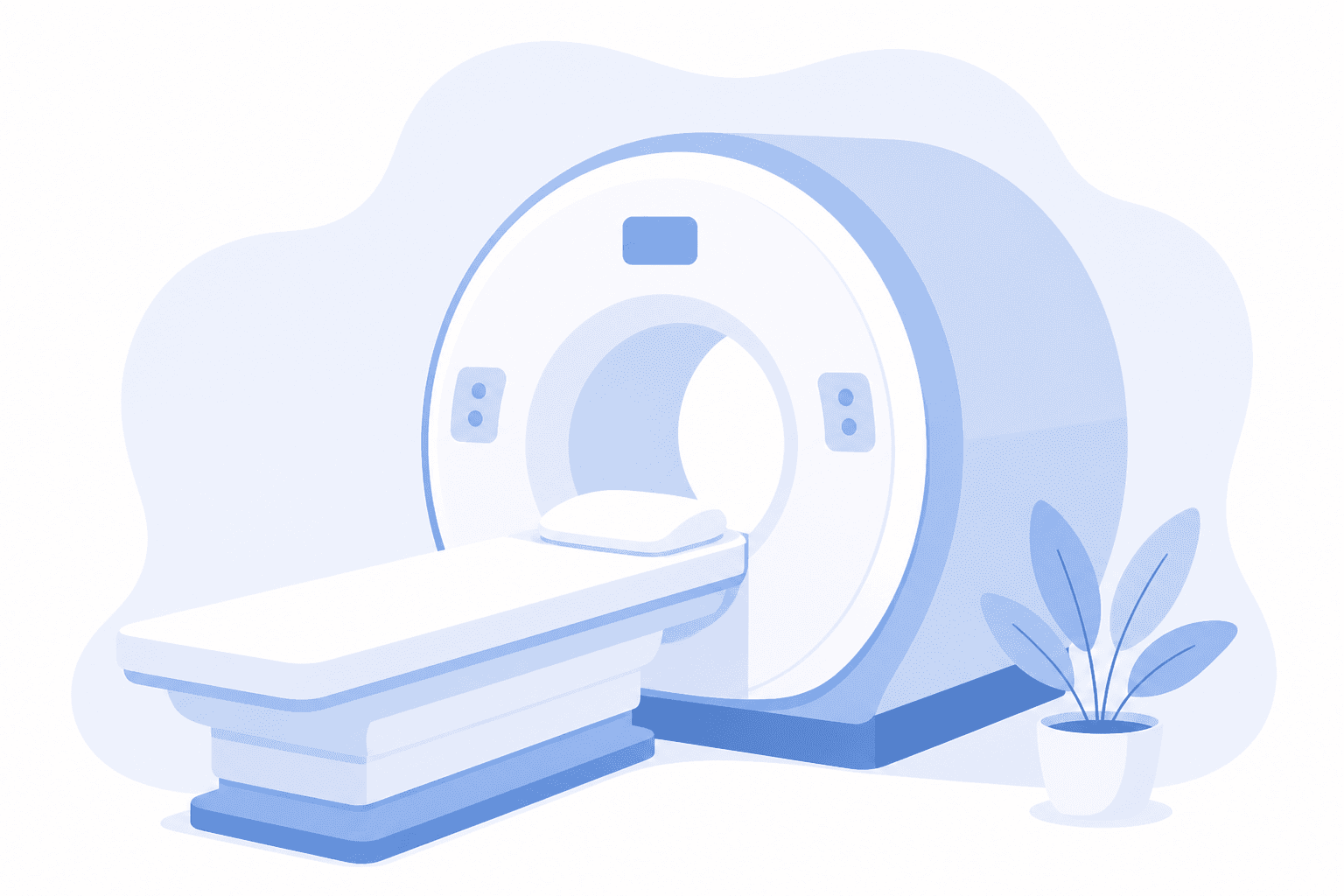
A radiographer scans you
10–60 minThe person at the machine is a radiographer or sonographer. Imaging specialists, but not the doctor who reads your scan. That's why they can't discuss findings on the spot.
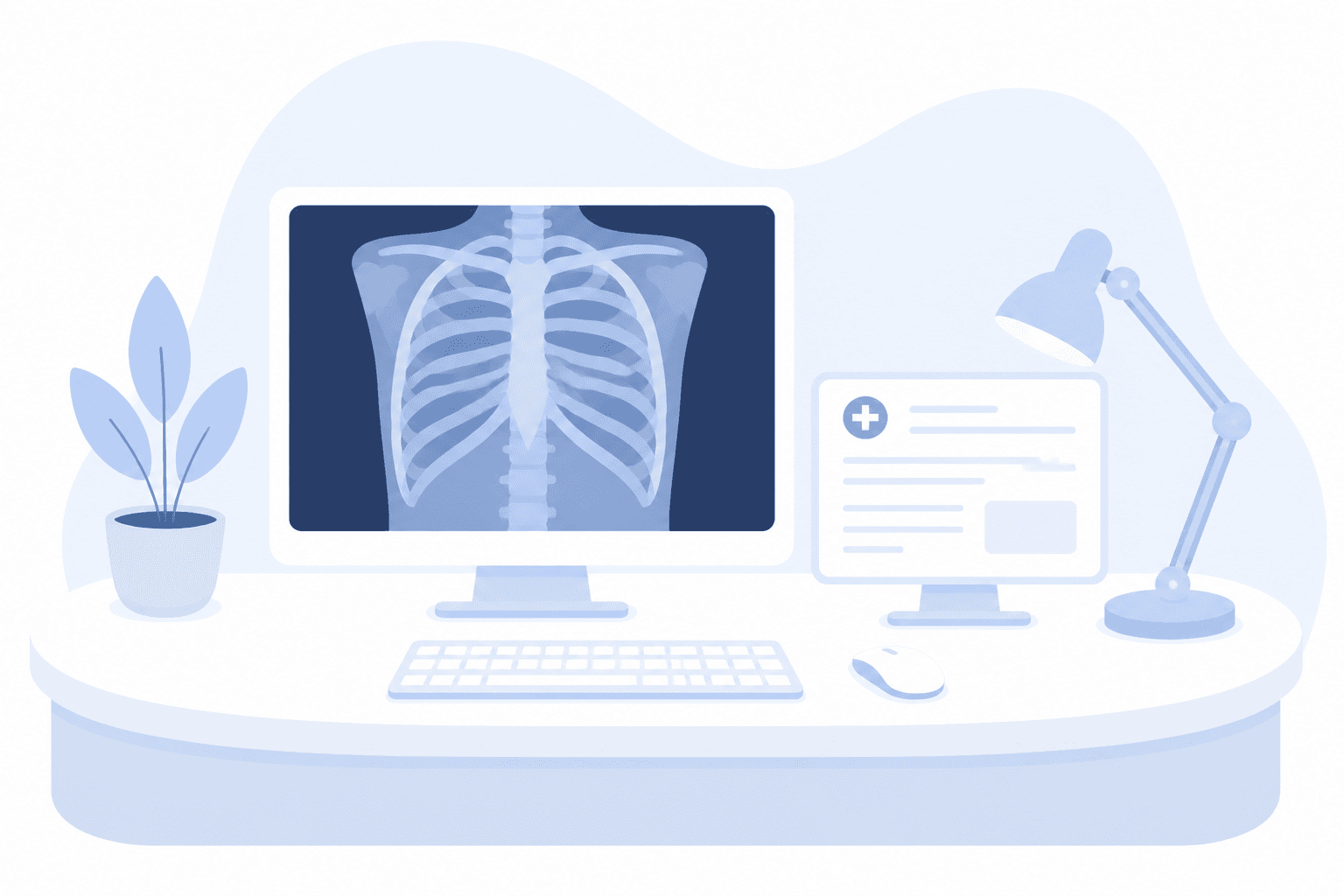
A radiologist reads it
1–2 daysA radiologist (a specialist doctor) examines every image and writes the report. Anything urgent, they phone your doctor straight away.

Your results
24–48 hrsThe report goes to the doctor who referred you. Book a follow-up to walk through what it means.
In this guide
What is radiology?
Radiology is the branch of medicine that uses imaging to diagnose (and sometimes treat) disease. When your doctor sends you "for imaging" or "to radiology", they mean a scan at a radiology clinic - also called an imaging or diagnostic imaging clinic.
Despite the name, radiology covers much more than radiation-based tests. A modern Australian radiology clinic performs X-rays, CT scans, ultrasound, MRI, mammography, DEXA bone density scans, and often nuclear medicine - some of which use no radiation at all.
Radiologist, radiographer, sonographer - who does what?
Three different professionals are involved in most scans:
- Radiologist - a specialist doctor who interprets your images and writes the formal report your GP relies on. You often won't meet them, but they review every scan.
- Radiographer (medical imaging technologist) - the university-trained professional who operates the X-ray, CT, and MRI equipment and positions you for the scan.
- Sonographer - the accredited professional who performs ultrasound examinations.
So the person scanning you usually isn't a doctor - which is also why they can't discuss findings on the spot. The answers come in the radiologist's report, usually with your GP within 24-48 hours.
What scans does a radiology clinic do?
Most community radiology clinics in Australia offer:
- X-ray - bones, chest, and joints; often walk-in
- Ultrasound - pregnancy, abdominal, pelvic, musculoskeletal, and vascular scans
- CT scan - fast, detailed cross-sectional imaging
- MRI - detailed soft-tissue imaging (not all sites have a Medicare-licensed machine)
- Mammography - breast screening and diagnostic imaging
- DEXA - bone density testing
- Interventional procedures - ultrasound- or CT-guided injections and biopsies
Not every clinic offers every service, and MRI licensing in particular varies between sites - which affects whether Medicare contributes to the cost.
Do I need a referral to visit a radiology clinic?
Almost always, yes. Diagnostic imaging in Australia requires a referral from a GP, specialist, dentist, or other eligible practitioner - both for clinical safety and for Medicare eligibility. The main exception is BreastScreen Australia's free screening program, which you can book directly.
Importantly, your referral is not locked to the clinic whose name is printed on it. You're free to take it to any radiology provider - which means you can compare price, bulk billing, and availability before you book. See do I need a referral? for details.
How much does radiology cost in Australia?
It varies widely by scan and by clinic:
- X-rays - very commonly bulk billed (no out-of-pocket cost)
- Ultrasound - frequently bulk billed; gaps up to about $100 at some clinics
- CT - often $0-$200 out of pocket with Medicare
- MRI - the most variable: $0-$250 at Medicare-licensed sites for eligible scans, but $300-$800+ if the scan or scanner isn't Medicare-eligible
Every clinic sets its own fees and bulk-billing policy, so the same scan can be free at one provider and cost hundreds at another. See our imaging costs guide for detail by scan type.
How do I find a radiology clinic near me?
Rather than ringing around, compare clinics in one place:
1. Check your referral for the scan type and body part 2. Search imaging clinics on Radly by scan type and suburb 3. Compare bulk billing, prices, reviews, and opening hours side by side 4. Request a booking online with your referral - the clinic replies with its next available time
Radly lists radiology clinics across Victoria with live profiles, so you can find a provider near home or work and book without phone tag.
Your choice of clinic.
One place to start.
Compare clinics, choose the one that suits you and send your appointment request. The clinic contacts you to confirm.
Book a scan with RadlyMedical disclaimer: This guide is for general informational purposes only and is not a substitute for professional medical advice. Always consult your referring doctor for advice specific to your condition. Information is current as of August 2026.