Pelvic Ultrasound: What to Expect, Preparation & Cost
A patient guide to pelvic ultrasound in Australia - what the scan checks, transabdominal vs transvaginal approaches, the full-bladder preparation, costs, and bulk billing.
- Time at clinic
- 20–40 min
- Typical cost
- $0–$100 with Medicare
- Referral
- Required
- Radiation
- None
What to expect at your pelvic ultrasound
Step 1 of 4

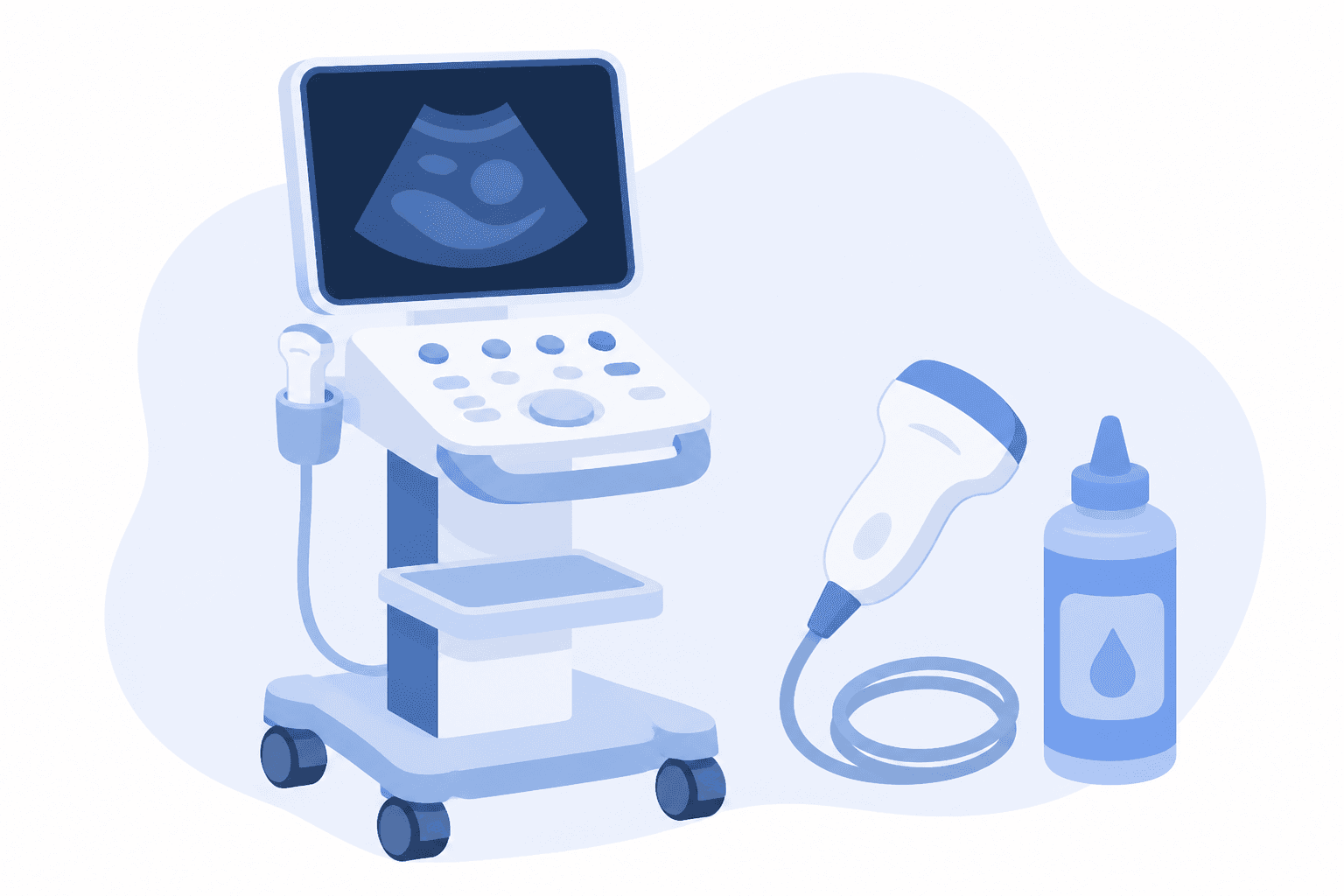

Arrive and check in
10 min earlyReferral + Medicare card. This one usually needs a full bladder. The clinic confirms when you book.
Plays automatically. Tap a step to jump
In this guide
What is a pelvic ultrasound?
A pelvic ultrasound uses sound waves - no radiation - to examine the organs of the pelvis. In women that usually means the uterus, ovaries, and surrounding structures; in men it can assess the bladder and prostate.
You may see it written as "pelvic sonography" or "USG pelvis" on a referral - they all mean the same test. It's one of the most commonly ordered scans in Australia, and one of the safest: ultrasound has no known risks and can be repeated as often as needed.
What can a pelvic ultrasound detect?
Pelvic ultrasound is commonly ordered to investigate:
- Heavy, painful, or irregular periods
- Pelvic pain or bloating
- Suspected fibroids or ovarian cysts
- Endometriosis assessment (often with a specialised scan)
- Fertility investigations and cycle tracking
- Early pregnancy checks and bleeding
- Bladder problems, and prostate assessment in men
The scan shows the size, shape, and texture of the pelvic organs in real time. If something needs a closer look, your doctor may follow up with a more specialised ultrasound or MRI.
Transabdominal vs transvaginal: which will I have?
There are two approaches, and they're often used together in the same appointment:
- Transabdominal - the sonographer moves the probe over your lower abdomen, using your full bladder as a window to see the pelvic organs.
- Transvaginal (internal) - a slim probe is gently inserted into the vagina, giving much closer and clearer images of the uterus and ovaries.
The transvaginal scan is always done with your consent, in privacy, and you can ask for a chaperone or decline it - though image quality is usually better with it. Read our full transvaginal ultrasound guide for what to expect.
How do I prepare - do I need a full bladder?
Usually yes, for the transabdominal part. Most clinics ask you to drink around 1 litre of water, finishing about an hour before your appointment, and not empty your bladder. A full bladder lifts the bowel out of the way and acts as a window for the sound waves.
If a transvaginal scan follows, you'll be asked to empty your bladder first - so the discomfort doesn't last long.
Timing in your menstrual cycle sometimes matters for gynaecological questions, so mention your dates when booking and follow the clinic's exact instructions.
How much does a pelvic ultrasound cost in Australia?
With a valid referral and Medicare card, many pelvic ultrasounds are bulk billed - meaning no out-of-pocket cost. Where clinics charge a gap, it's commonly up to around $100 for a standard pelvic scan; specialised studies can cost more.
Because the same scan can be free at one clinic and carry a gap at another, it's worth comparing before you book. Search ultrasound clinics near you on Radly and check each clinic's bulk-billing notes - or read our bulk billed ultrasound guide.
Do I need a referral for a pelvic ultrasound?
Yes. Like all diagnostic imaging in Australia, a pelvic ultrasound needs a referral from your GP or specialist, and the referral is what makes the scan Medicare-eligible.
Your referral isn't locked to any clinic - you can take it to whichever provider suits you best, regardless of whose name is printed on the form.
What happens after the scan?
A radiologist reviews the images and sends a written report to your referring doctor, usually within 24-48 hours. Your GP or specialist will go through the findings with you and explain any next steps.
Many findings on pelvic ultrasound - like small ovarian cysts - are common and harmless, so try not to jump to conclusions before your follow-up appointment. Ready to book? Compare ultrasound clinics on Radly and request an appointment online.
Your choice of clinic.
One place to start.
Compare clinics, choose the one that suits you and send your appointment request. The clinic contacts you to confirm.
Book Ultrasound with RadlyMedical disclaimer: This guide is for general informational purposes only and is not a substitute for professional medical advice. Always consult your referring doctor for advice specific to your condition. Information is current as of August 2026.