MRI Scan: What to Expect, Preparation & Cost
Everything you need to know about MRI scans in Australia - how they work, how to prepare, what happens during the scan, how much they cost, and whether you need a referral.
- Time at clinic
- 20–60 min
- Typical cost
- $0–$250 with Medicare
- Referral
- Required
- Radiation
- None
What to expect at your MRI
Step 1 of 5

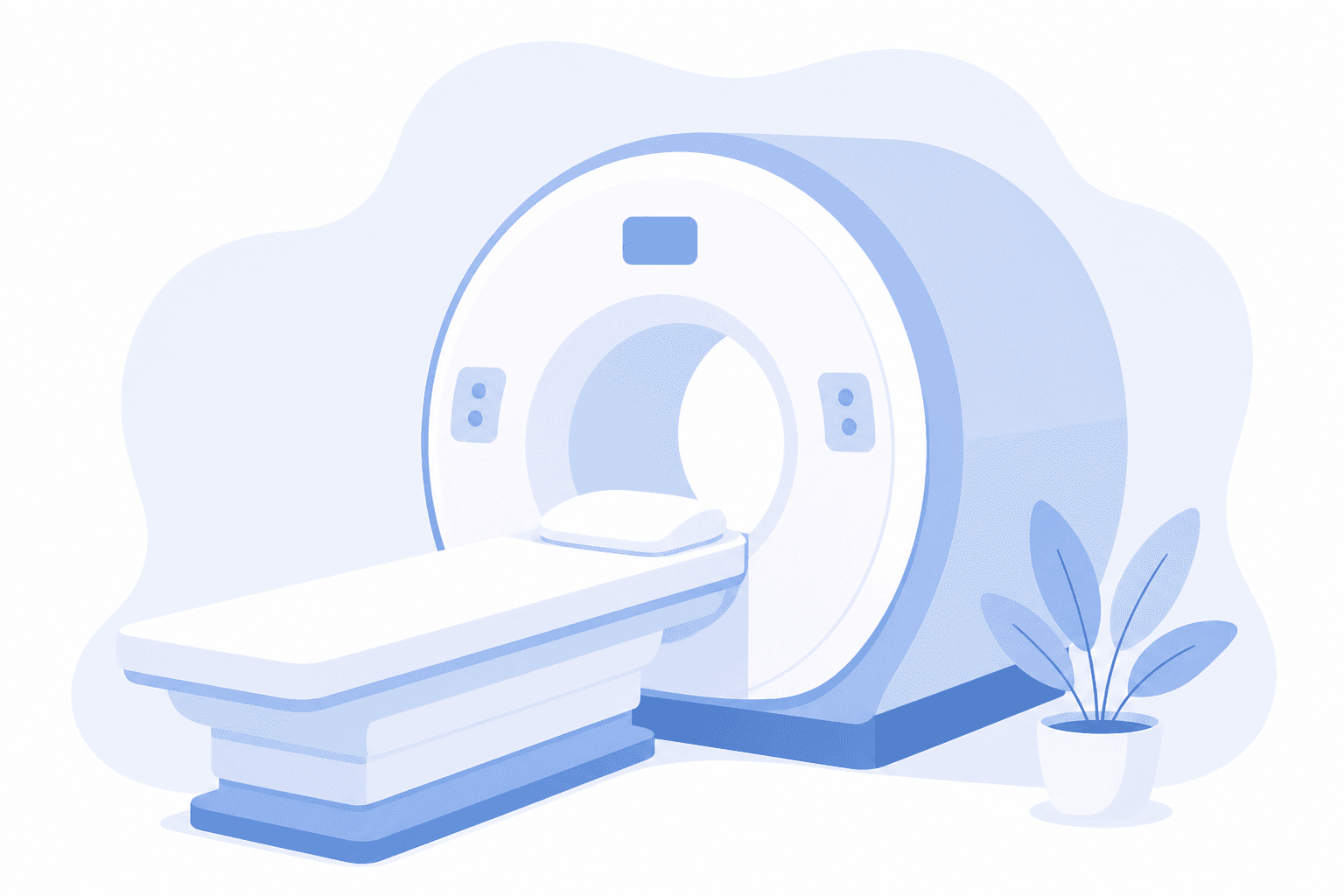


Arrive and check in
10 min earlyReferral + Medicare card. The front desk handles the rest.
Plays automatically. Tap a step to jump
In this guide
What is an MRI scan?
Magnetic Resonance Imaging (MRI) uses powerful magnets and radio waves to create detailed images of the inside of your body. Unlike X-rays or CT scans, MRI does not use ionising radiation, making it one of the safest imaging methods available.
MRI is particularly good at imaging soft tissues - the brain, spinal cord, muscles, ligaments, tendons, and organs. It produces high-resolution cross-sectional images that help doctors diagnose a wide range of conditions, from torn ligaments and herniated discs to brain tumours and multiple sclerosis.
What can an MRI detect?
MRI is commonly used to investigate:
- Brain and spinal cord conditions - tumours, stroke, multiple sclerosis, aneurysms
- Joint and musculoskeletal injuries - torn ACL, meniscus tears, rotator cuff injuries, herniated discs
- Heart and blood vessel problems - heart disease, aortic aneurysms
- Abdominal and pelvic organs - liver, kidney, uterine, and prostate conditions
- Breast imaging - as a supplement to mammography in high-risk patients
Your referring doctor will recommend an MRI when they need detailed soft-tissue images that other scans cannot provide.
How to prepare for an MRI
Preparation depends on the type of MRI, but general guidelines include:
- Wear comfortable, loose-fitting clothing with no metal (zippers, underwire bras, belt buckles). Many clinics provide a gown.
- Remove all metal objects - jewellery, watches, hair clips, piercings, hearing aids, and dentures.
- Tell the clinic if you have any metal implants, pacemakers, cochlear implants, or metal fragments in your body. Some implants are MRI-safe, but the clinic needs to check.
- You may need to fast for 4-6 hours beforehand if you're having an abdominal MRI or if contrast dye is being used.
- If you experience claustrophobia, let the clinic know in advance. They may offer an open MRI scanner or mild sedation.
Always follow the specific instructions your clinic provides when you book.
What happens during an MRI?
You'll lie on a padded table that slides into a large, tube-shaped scanner. The scanner is open at both ends.
The scan itself is painless, but the machine makes loud knocking and humming sounds. You'll be given earplugs or headphones. It's important to stay as still as possible - even small movements can blur the images.
Some scans require a contrast agent (gadolinium), which is injected into a vein in your arm. This helps certain tissues and blood vessels show up more clearly.
A typical MRI takes between 20 and 60 minutes depending on the body part being scanned. The radiographer can see and hear you at all times and you'll have a buzzer to press if you need to stop.
How much does an MRI cost in Australia?
MRI costs in Australia vary depending on the body part, whether contrast is used, and whether the clinic is Medicare-eligible.
- With a Medicare rebate (eligible scans at approved clinics): $0-$250 out-of-pocket
- Without Medicare (non-referred or non-eligible): $300-$800+
- Bulk-billed MRI: Available at some clinics for concession card holders or specific referral types. Availability is limited.
Not all MRI machines are Medicare-licensed. Your referring doctor can advise whether your scan is likely to attract a rebate. Use Radly to compare clinics and find the best price near you.
Compare MRI clinics near you
See clinic locations, reviews and pricing information where available. The clinic confirms your appointment and any applicable fees.
Book MRI with RadlyDo I need a referral for an MRI?
Yes. In Australia, you need a referral from a doctor (GP or specialist) to have an MRI scan. This is required both for clinical reasons and to be eligible for any Medicare rebate.
A GP referral is valid for 12 months. A specialist referral is valid for 3 months unless otherwise specified. Make sure your referral specifies the body part and clinical reason for the scan.
Does an MRI have radiation?
No. An MRI uses magnets and radio waves - not ionising radiation - so there is no radiation exposure at all. That's a key difference from X-rays, CT scans, and nuclear medicine, which all use small radiation doses.
It's why MRI can be repeated as often as clinically needed, and why it's often preferred for children and for follow-up imaging over time. If radiation is your worry, MRI and ultrasound are the two scans that use none.
Is an MRI safe?
MRI is considered very safe. It does not use ionising radiation, so there is no radiation exposure.
The main safety considerations are around metal. The powerful magnets can attract metal objects and interfere with certain implants. Always disclose your full medical history to the clinic.
Gadolinium contrast is generally safe but is avoided in patients with severe kidney disease. Pregnant women are usually advised to avoid MRI in the first trimester unless medically necessary.
There are no known long-term side effects from MRI scans.
Your choice of clinic.
One place to start.
Compare clinics, choose the one that suits you and send your appointment request. The clinic contacts you to confirm.
Book MRI with RadlyMedical disclaimer: This guide is for general informational purposes only and is not a substitute for professional medical advice. Always consult your referring doctor for advice specific to your condition. Information is current as of April 2026.