Mammography: What to Expect & How to Prepare
Everything you need to know about mammograms in Australia - what they are, how to prepare, what to expect, screening programs, and costs.
- Time at clinic
- 15–20 min
- Typical cost
- Free via BreastScreen (if eligible)
- Referral
- Not needed for screening
- Radiation
- Very low
What to expect at your mammogram
Step 1 of 3

Arrive and check in
10 min earlyEligible for BreastScreen? Screening is free with no referral. Check the program's website. Skip deodorant and powder on the day; they can show up on images.
Plays automatically. Tap a step to jump
In this guide
What is a mammogram?
A mammogram is an X-ray of the breast used to detect and diagnose breast disease. It is the most effective screening tool for detecting breast cancer early - often years before a lump can be felt.
There are two types of mammograms:
- Screening mammogram - a routine check for women with no symptoms, usually part of BreastScreen Australia's free program
- Diagnostic mammogram - a more detailed examination when a lump, pain, or other breast change has been detected
Who should get a mammogram?
Routine screening for women without symptoms is provided free through the government-run BreastScreen Australia program. Eligibility and screening intervals are set by the program and are broadly age-based - check the current details directly with BreastScreen (in Victoria, via the BreastScreen Victoria website) rather than relying on a third-party summary.
Women at higher risk (family history, genetic mutations like BRCA1/BRCA2) may be advised to start earlier and screen more frequently - your GP can advise on the right schedule for your personal risk level.
If you notice any changes in your breasts at any age - a lump, skin changes, nipple discharge, or pain - see your GP promptly. That's a diagnostic pathway, not screening. See our BreastScreen vs diagnostic mammogram guide for the difference.
How to prepare for a mammogram
- Schedule your mammogram for 1-2 weeks after your period when breasts are least tender
- Don't apply deodorant, antiperspirant, powder, or cream to your underarms or chest on the day - these can show up as white spots on the images
- Wear a two-piece outfit so you only need to remove your top
- Bring your previous mammogram images if you've had them done at a different clinic
- Tell the clinic if you have breast implants - they require a modified technique
- Let the staff know if you are breastfeeding or think you might be pregnant
What happens during a mammogram?
A mammogram takes about 10-20 minutes in total.
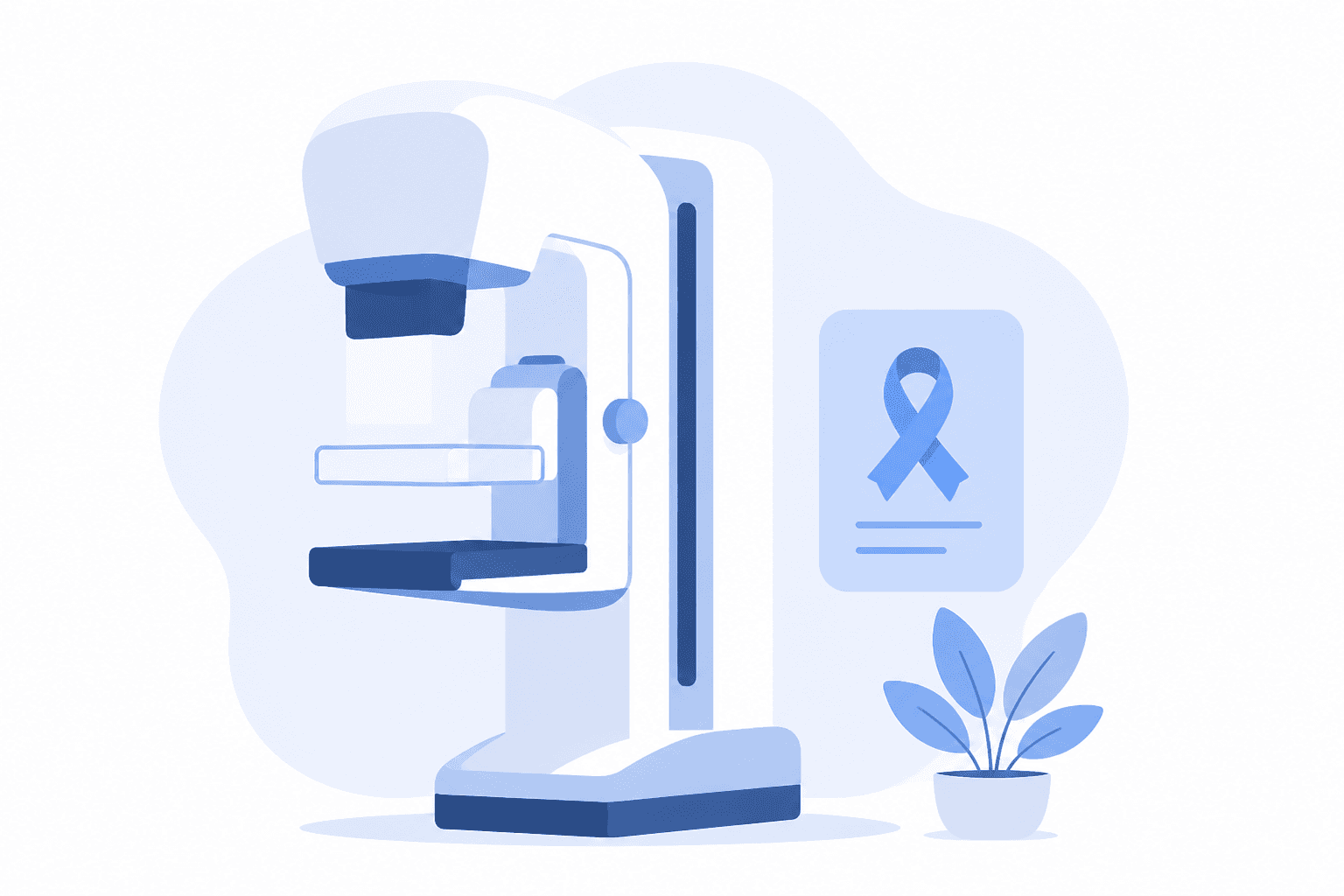
The radiographer will position one breast at a time on a flat plate. A second plate presses down from above to compress the breast firmly. This compression is necessary to spread the tissue for clear images and to reduce the radiation dose.
You'll feel pressure and possibly some discomfort, but it only lasts a few seconds per image. Two images are usually taken of each breast - one from above and one from the side.
If you find mammograms particularly uncomfortable, paracetamol taken 30-60 minutes before your appointment may help.
How much does a mammogram cost?
- BreastScreen Australia: Free for eligible women (no referral needed - check eligibility with the program directly)
- Medicare-referred diagnostic mammogram: $0-$80 out-of-pocket
- Private/no referral: $150-$350
BreastScreen Australia is a free national screening program - you book directly with the program, not through a radiology clinic. For diagnostic mammograms (investigating a specific concern), you'll need a referral from your doctor and Medicare will cover most or all of the cost.
Compare Mammography clinics near you
See clinic locations, reviews and pricing information where available. The clinic confirms your appointment and any applicable fees.
Book Mammography with RadlyWhat happens after a mammogram?
Your images are reviewed by a radiologist. Results are usually available within 1-2 weeks for screening mammograms and faster for diagnostic ones.
If your mammogram is normal, you'll be invited back in 2 years for your next screening.
If something abnormal is detected, don't panic - most abnormalities on mammograms are not cancer. You may be called back for additional imaging (extra mammogram views, ultrasound, or MRI) or a biopsy to get more information.
Early detection through regular mammograms significantly improves breast cancer outcomes. When breast cancer is found early, the 5-year survival rate is over 90%.
Your choice of clinic.
One place to start.
Compare clinics, choose the one that suits you and send your appointment request. The clinic contacts you to confirm.
Book Mammography with RadlyMedical disclaimer: This guide is for general informational purposes only and is not a substitute for professional medical advice. Always consult your referring doctor for advice specific to your condition. Information is current as of August 2026.