Bone Density Scan Cost in Australia | DEXA & Medicare
Understand DEXA scan fees, bulk billing and Medicare eligibility in Australia. Find bone density clinics near your suburb and book online.
- Bulk billed (Medicare-eligible)
- $0
- Medicare-eligible with gap
- Confirm with clinic
- Private (no rebate)
- Ask for a quote
- Scan time
- 10–20 min
How to get a rebated bone density scan

Check you qualify
1 GP visitMedicare covers DEXA only for specific criteria: 70+, a previous minimal-trauma fracture, long-term steroids, or bone-affecting conditions. Your GP checks and writes the referral.
Find a bulk billing clinic
5 minEligible scans are $0 at bulk-billing clinics and usually under $30 elsewhere. Your referral works at any clinic. Compare before you book.
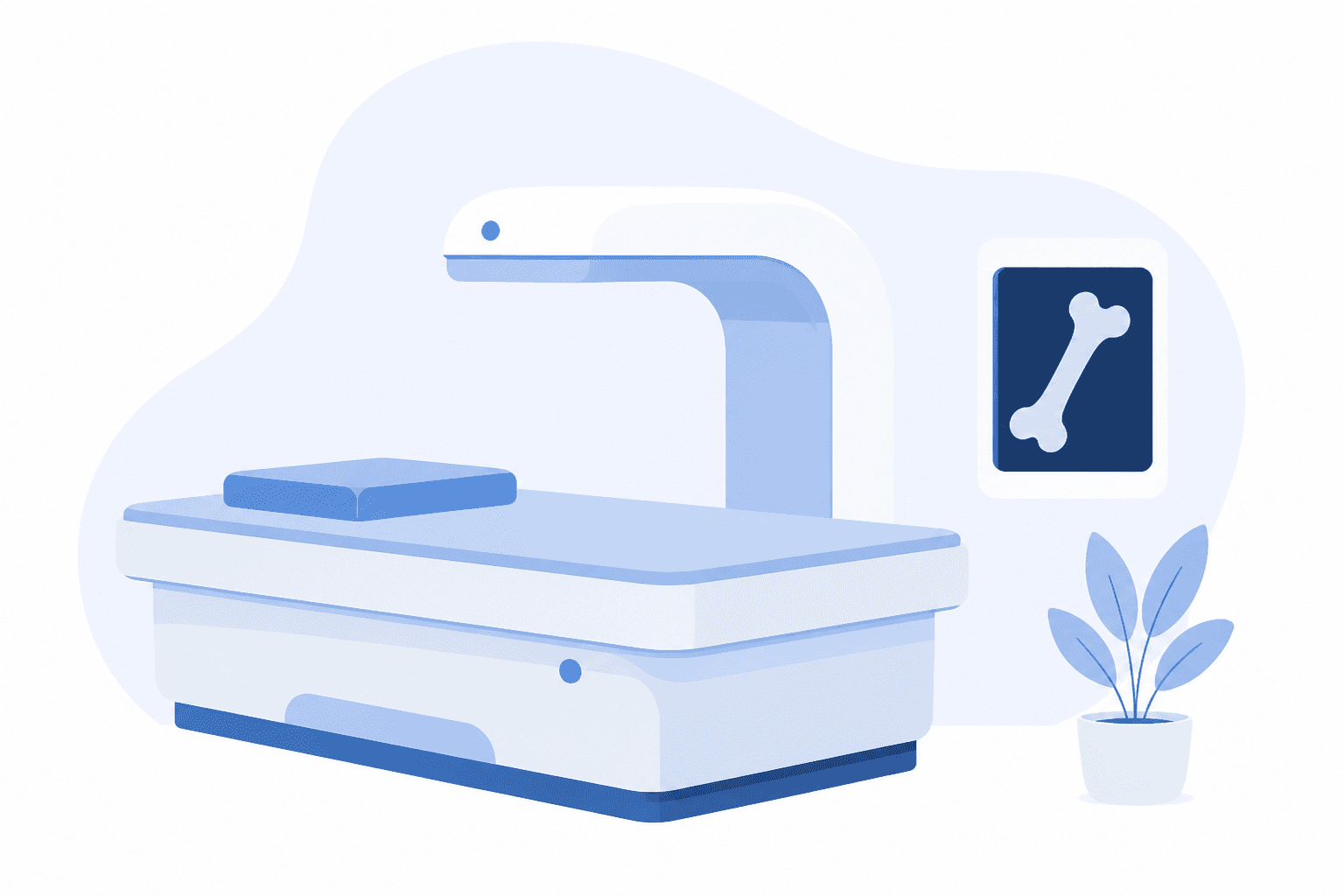
Quick and open
10–20 minYou lie on an open padded table while a scanning arm passes over your hips and spine. No tunnel, no injections. Skip calcium supplements for 24 hours before.

Your results
24–48 hrsYour GP gets a report with your T-score and explains what it means. And when Medicare will fund your next scan.
In this guide
How much does a bone density scan cost in Australia?
Your cost depends on the clinic’s fee and whether your scan meets Medicare criteria. If the clinic bulk bills your eligible scan, there is no out-of-pocket charge for that service. Otherwise, ask for the total fee, expected rebate and remaining gap before your appointment.
There is no single private price or universal maximum gap. A clinic’s bulk-billing badge does not guarantee that every scan or patient qualifies. See Services Australia’s explanation of bulk billing.
Find DEXA clinics near your suburb, check their billing information and book online. The clinic confirms your appointment and fee.
Am I eligible for a Medicare rebate on a DEXA scan?
Medicare funding depends on the clinical indication and the applicable bone-densitometry item, including repeat-test restrictions. A referral alone does not guarantee a rebate. Criteria cover particular fracture, bone-loss and medical circumstances, with separate items for people aged 70 and over.
Ask your referring clinician and imaging clinic to check which item applies to you and when you last had a scan. The official MBS bone densitometry notes explain the indications and restrictions.
What do DEXA, DXA and BMD mean?
DEXA and DXA refer to dual-energy X-ray absorptiometry. BMD means bone mineral density, which a bone density scan measures. Body-composition DEXA is a different purpose from a diagnostic bone density examination; confirm that the clinic offers the examination on your referral.
Read our DEXA scan guide for more about the examination.
How often can I have a Medicare-rebated DEXA scan?
The permitted interval depends on the MBS item and your circumstances. Do not assume an annual repeat is covered. Your referring clinician and imaging provider can check your previous scan date and the relevant MBS rules before booking.
How do I book a bone density scan near me?
1. Have your referral available and check the examination requested. 2. Find DEXA clinics by suburb. 3. Check the location, access information and billing details. 4. Book online and ask the clinic to confirm the fee and appointment time.
Follow the clinic’s preparation instructions and bring any previous results they request. Appointment availability varies; Radly does not guarantee a particular waiting time.
Compare DEXA clinics in your area
Find a DEXA clinic near you or explore imaging clinics in Bendigo. Check each clinic’s listed services to find the right examination.
You can also browse local DEXA options in Bendigo, Epping and Castlemaine. Review the actual clinic location before booking, including nearby options outside your selected suburb.
Your choice of clinic.
One place to start.
Compare clinics, choose the one that suits you and send your appointment request. The clinic contacts you to confirm.
Book DEXA Scan with RadlyMedical disclaimer: This guide is for general informational purposes only and is not a substitute for professional medical advice. Always consult your referring doctor for advice specific to your condition. Information is current as of September 2026.